

Text : Wolfgang Strasdas, Photos : Plenty International
Belize with its pristine jungles and the world’s second largest barrier reef has positioned itself as a prime destination for ecotourism. What is less known is the fact that Belize is also one of the most ethnically diverse countries in the world. Its 250,000 inhabitants comprise the indigenous Mayas, black Creoles and the Afro-Caribbean Garifuna as well as descendants of other immigrants from as far away as India.
The Toledo Ecotourism Association (TEA), founded in 1990, was one of the first community-based organizations seeking to benefit from this cultural and ecological diversity and the interest of many travellers in authentic experiences. Situated in the remote district of Toledo in Southern Belize with its lush rainforests, rich wildlife, waterfalls and caves the TEA comprises 8 traditional Mayan villages in the mountainous backcountry and the Garifuna fishing community of Barranco on the coast.
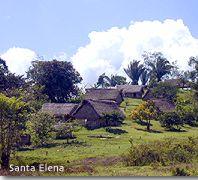
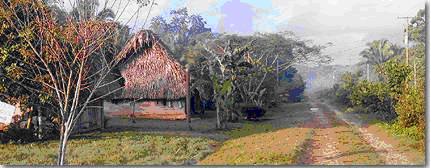
Visitors to any of the TEA villages can expect an outstanding experience in an authentic cultural setting. Besides birdwatching, visits to ancient Mayan ruins, canoe trips and forest hikes with a local guide, tourists are also offered cultural performances and crafts lessons. But above all it is the everyday life of the village people that visitors get to know on a personal basis – an experience which has been the most highly praised in the TEA’s guestbooks. It helps that the Garifuna and most Mayans speak English, the national language of Belize. Local meals are served in different families’ homes. Accommodation is in simple, but clean and comfortable guesthouses built in the traditional style with local lumber and thatch roofs.
With the support of an expatriate who provided advice and training, the TEA has not only succeeded in developing an attractive tourism product. The organisation has also conceived a structure that incorporates all the essential principles of fair trade and community-based tourism. All services are provided by community members ; over 80% of the income thus generated stays within the local economy. A rotation system is supposed to spread the tourism business equally among the villages as well as among the families within a village. 4% of the income is earmarked for a village fund for social purposes. In 1997 the TEA received the renowned ToDo ! Award for socially responsible tourism (www.studienkreis.org).
In view of the many difficulties that CBT projects face in an increasingly competitive global marketplace this sounds almost “too good to be true”. In fact, the TEA has had its share of difficulties and challenges. One challenge has to do with the capacity to manage a business and organize tours in advance. While services are usually excellent once a visitor arrives in a village, the necessity of marketing and maintaining an office in town has not been fully grasped by many TEA members. As a consequence, overall visitor numbers have stayed fairly low. While this can also be seen as a plus by the individual visitor seeking authenticity, it limits the TEA’s economic success in a society where alternative sources of cash income are badly needed. The rotation system is another ongoing issue within the TEA. In spite of its general desirability its implementation faces a variety of difficulties. One is that some villages are more easily accessible than others. The quality of tourist attractions and services may vary as well. Another reason is insufficient accounting and record-keeping. As in so many other CBT ventures this has led to conflicts within the TEA membership.
Still, for 15 years the organization has gradually improved and has managed to overcome many obstacles, not the least of which was hurricane Iris which struck Toledo in the late fall of 2001, but went almost unnoticed by the world in the aftermath of September 11. Some of the TEA guesthouses were destroyed, but were subsequently rebuilt – just as the rainforest has recovered from this natural disaster and is once again thriving with new plants and wildlife.
The Toledo District lies in the Southern tip of Belize, between the Maya Mountains, the Guatemalan border and the Gulf of Honduras. Punta Gorda is the region’s “capital” and its only town with hotels and all basic services.
Access to Punta Gorda is either by public bus along the Southern Highway from Belize City (a day-long trip, partially on unpaved roads), by small plane (about one hour from Belize City) or by boat from across the Gulf of Honduras from the Guatemalan towns of Puerto Barrios or Livingston (2 hours approx.).
To get to the villages, there are two choices : Public busses or rental cars (the latter are rather expensive in Belize). The villages near the Southern Highway (Medina Bank, Laguna and San Miguel) can be reached very day by simply getting off one of the Belize City buses. All other villages can only be reached on market days. Busses leave Punta Gorda around noon time and do not return before the next market day, which may be several days later. Contact the TEA office for up to date schedules.
Contact
Toledo Ecotourism Association
Punta Gorda Town, Belize/C.A.
Ph. +501 702 2119
www.teabelize.org
Email : jpdicks@yahoo.com
Cultural Background
Belize has been part of the great Mayan civilisation which dominated large portions of Central America throughout the (European) Middle Age. Today’s Kekchi and Mopan Mayas have re-immigrated to Toledo from neighbouring Guatemala in the 19th century and now represent over 50% of the population there. The villages in the interior of Toledo are almost exclusively Mayan most if whom still live a traditional subsistence lifestyle based on slash and burn agriculture. Corn is the staple food, but to a limited degree rice, beans and cocoa are also cultivated as cash crops. The ancient Kekchi and Mopan languages are widely spoken, but almost everyone speaks English as a second language and (occasionally) Spanish.
While there is a strong cultural identity and pride among the Mayans (which is also quite “picturesque” for tourists), younger people find it increasingly hard to make a living in one of the villages and try to find work elsewhere. Also, because of strong population growth, the traditional slash and burn agriculture – along with commercial logging by outside companies - increasingly poses a threat to the natural environment in Toledo. Therefore, tourism is seen as an opportunity to produce additional cash income to many families.
The Garifuna are the second distinct ethnic group in Toledo. Originally from the Caribbean Islands and descendants of freed African slaves and indigenous Caribbean Indians they arrived on the Belizean coasts in the early 1800s. The Garifuna have managed to conserve their own language which contains strong African elements. A modern adaptation of traditional Garifuna drum music, Punta Rock, is now quite popular in all of Belize. The Garifuna economy is largely based on fishing and their villages, such as Barranco, are exclusively found along the coast. In spite of their strong traditions the Garifuna have been more successful than the Mayans to integrate into mainstream Belizean society. Many of them have become successful professionals in Belize City or the United States. Emigration is therefore a major problem in the villages. Again, it is hoped that tourism may be able to stem this trend.