


Text : Suzanne Jamison and Roy Kady
Yá’át‘ééh (Welcome)
Diné be’ iiná, Inc. is a grassroots, nonprofit organization founded in 1991. Diné be’ iiná’s mission is to restore the balance between Navajo culture, life, and land. While serving all sheep producers, DBI is particularly dedicated to conserving the traditional Navajo-Churro sheep breed as well as to educating the community and the public about the importance of Navajo Sheep Culture and spirituality.
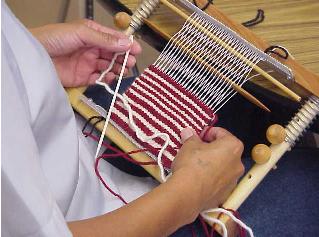
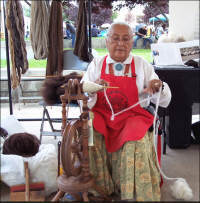
DBI’s Goals are to restore status to sheep herding, wool processing, and fiber arts, and to promote the education that is necessary for their pursuit in the modern world. DBI’s Activities provide leadership, economic development, and support for traditional lifeways of Navajo shepherds and fiber artists. Take a moment to browse our site, see our photos, and listen to our story.
Contact :
Diné be’ iiná, Inc.
Roy Kady, Project Director
Or
Rachael Dahozy, Office Manager
PO Box 683, Window Rock, Arizona 86515 États-Unis
Tel. : Office, 928-729-2037 ; Roy Kady, 928-656-3498
Phone : (505) 406-7428
E-mail : roykady@navajolifeway.org or e-mail through the web site
E-Mail : info@navajolifeway.org
Director : tnaataanii@navajolifeway.org
Website : www.navajolifeway.org
Language : Navajo or English
Cultural information
_Encompassing over 27,000 square miles in Arizona, New Mexico, and Utah, the Navajo Nation (NN) is the geographically largest Native American nation in the U.S. With 256,712 enrolled members, it is the second largest in population ; 175,228 Navajos reside within the Nation’s boundaries. This is a 3.5 times increase over the 50,000 people who lived on the Nation’s 17 million acres in 1940 and marketed 300,000 lambs annually. (Data from the 2000 US Census, provided by the Navajo Nation Division of Economic Development.)
The Navajo Nation is divided into 110 Chapters (local governance units), grouped into five Agencies (administrative districts). Kayenta is the only incorporated township. Most population centers are clusters of housing around schools, hospitals, trading posts, and chapter houses. Distances are vast and the road conditions are rough on any vehicle. According to the NDED, NN unemployment is 44 percent, the median family income is $11,885, and the per capita income is $6,217.
"Sheep is in every essence an important part of our culture and traditions. It is important to celebrate our sheep traditions and our lifeways. Our Sheep Is Life Celebration re-centers us in the cosmos of our universe ; it is our blessingway ceremony for our continuance here on earth, and for the next generations to come." Roy Kady, former President of DBI
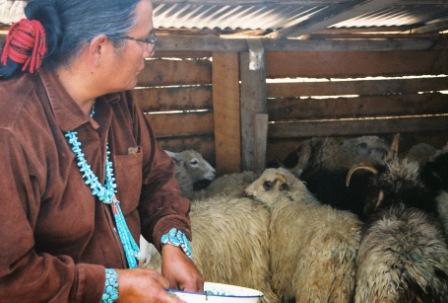
Dine be’ iina, Inc. (The Navajo Lifeway) is a nonprofit organization of Dine producers and weavers founded in 1991 and incorporated in the Navajo Nation. The organization assists sheep, goat, and fiber producers in the Navajo Nation with technical and educational infonnation to help them regain their economic self-sufficiency. (Sheep and goats are usually raised together. Reference to sheep and wool in this proposal includes goats and mohair, as well as guard llamas and other animals.) For centuries, sheep and goats provided us with economic self-sufficiency and fonned the foundation for our culture.
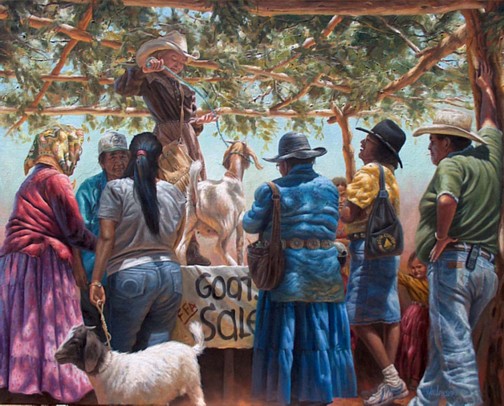
Dine producers were not prepared for the sudden termination of wool incentive payments in 1996 and the closing of the Navajo Wool Warehouse in 1998. According to Mike Com at the Roswell Wool Warehouse, Navajo wool brings only 20 to 40 percent of what competing wool brings. However, Dine have a well-deserved reputation for ingenuity, resourcefulness, hard work, entrepreneurship, adaptability, and artistry. By understanding and implementing appropriate risk management practices, the producers can combine traditional knowledge with contemporary best practices to restore their life, land, and livelihood.