
Text : Métilde Wendenbaum
Photos : Godwin Mawoh
Belo Rural Development project (BERUDEP) created in 1990, works towards poverty alleviation of the rural population through education, health, income generating activities, and support of the disabled. As the North West province was lending itself naturally to the task of ecotourism with a welcoming population, stunning natural sites and an interesting culture, BERUDEP introduced in 2003 small scale ecotourism into the area.
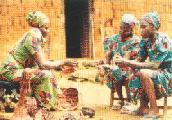
BERUDEP is inviting visitors to experience rural life by living with a family in the beautiful North West. Tourists can choose the village in which they will be staying, the number of days and the activities. They will meet the family and eat together, walk through the village and meet relatives, walk for water with the children, pound fufu-corn for dinner, shop at the local market, walk to the waterfalls and caves, ride horses and milk cows, talk and roast corn around a fire pit, listen to the stories from long ago.
Extra activities can be organised such as walking and trekking in the countryside with the people who grew up there or horse riding tours but also bee keeping trip.
Guides will stay in the same or nearby village and check up visits will be arranged between guide and visitor(s).
Homestay families are chosen based on personal references by the BERUDEP staff and have completed a BERUDEP training programmes. Families are monitored for hygiene and safety. Tourists can stay in the same compound each night or stay each night with different families and experience the lifestyles of Christian, Moslems or non-religious families. Families are located in different area : 2 home-stays are situated in is the small village Mbingo, 4 families in Belo area, 3 families in Fundong area, 2 families in the Oku area.
The number of people living in the compound ranges from 10-45, family and non-family members of all ages. The head of the compound has often many wives.
The occupation of the family members are very diverse : from farming household and grazing of cows, producing crafts, working at Kids Co-op or at the children’s library, working as pastor, working at the agricultural ministry, etc…. Most of the young children go to primary school, some older are going to the university.
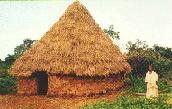
The maximum number of guests able to house ranges from 3-6 persons sleeping on foam or grass mattresses. House style is ranging from basic traditional mud brick houses to modern house with Western equipment and electricity. They have clean pit toilets, and water available near the house but plumbing is not always reliable. There is often no specific area for bathing, but the family will prepare a private area to be use as bathroom. Bathing is done mainly by using a bucket. Sometimes stick fences to keep cows, horses and goats out of the compound surround the property.
Homestay costs are based on length of time, pick up and departure points. All the costs are redistributed directly to the local people by BERUDEP. This project helps definitely the poor benefit from the beauty and culture surrounding them while teaching the importance of preservation
Contact :
Godwin Mawoh
Address : P.O.Box 10, Belo,
Boyo Divison, NWP, Cameroon
Telephone : (237) 760-1407 or
(237) 732-3407
E-mail : berudep@yahoo.com
Internet : www.berudep.org
Other national or international tour operators that commercialize this product :
tch-voyages in France
Tel : +33 (0)8 92 68 03 36 (fast service)
Tel : +33 (0) 1 34 25 44 44
Fax : (33) 01.34.25.44.45
15, rue des Pas Perdus
B.P 8338
95804 Cergy St. Christophe
Email : informations@tch-voyage
Internet : www.tch-voyages.fr
Cultural information on the community :
There are 2 main tribes who live in Boyo Division. These are the Kom and the Fulani. One main distinction between these 2 groups is their religions. Most Kom people are Christians and the Fulani are Muslims.
Kom is also the name of the language they speak. They were the first to settle in the area and are one of the many Tikari tribes that are scattered through west Africa. They have market days every 8 days and no-one goes to the fields on Sundays and country Sundays (traditional Sabbath days instituted for leisure and to make the Kom citizens to have rest). This traditional was strictly practised some 20 years back. But with the fast changing world its’ practice is no longer strict. The Kom people of Boyo are crop farmers with maize as the main crop. They build their houses from mud brick and roof them with grass or corrugated iron if they can afford it. Many houses are built in one area and called a compound. If a man has more than 1 wife (and in the past it was not uncommon to have 4 or 6 !) then each wife has her own house and the husband his own. The staple food is fufu and njamajama that is a boiled ground-up maize mixture and boiled spinach-like vegetable. The English level is better closer to the village centres but is minimal further out.
The Fulani are ex-nomadic grazers who originated from parts of Senegal and Mali. They now make up a substantial population throughout Cameroon mostly concentrated in the North. The Fulani are Moslems and they speak an Arabic dialect called Fulfulde. The Fulani in Boyo Division have a heavier population around Fundong village and graze cattle in the highlands. Traditionally only cattle grazers, but they are beginning to grow crops as well and they have a high yield due to the use of the cattle dung as a natural fertiliser. Having up to 4 wives they have large families with many generations living in one compound. Their houses are made with mud brick but unlike the Kom they often paint the outside of their houses with a clay based paint and use a dung and ash mixture to make a hard packed floor inside the house. Wealth is measured in the amount of cattle a family owns. Due to the isolated areas they tend to live in, the Fulani will own and ride horses, if they can afford it. Also a very traditional people, the Fulani are very welcoming and with minimal English (in general) they strive to make their feelings known through actions and gestures.
The North West Province is one of 2 English speaking provinces- the remaining 8 speak French as a second language to the local tribal languages. In all provinces visitors can find people who speak French and English, especially the young university students.
Types of services offered
In the region : Museums are located in Bamenda 1 hour drive from Boyo where the homestay are taking place. Handicraft centers and Craft shops can be found in Boyo and Bamenda. Traditional dances and music events are most organised during the dry seasons to avoid interruption of rain.
Recommended Tours
Title : Homestay and Eco Walks
Duration : 3 days
Type of activities : People can choose from just staying at home and have short walks in the surrounding or going on long treks and excursions.
Examples of activities:Walking to a waterfalls, walking to a traditional market to learn how to buy by bargaining. Walks to old traditional compound and talk with the family head having many villagers gathered around to questions and participates in discussion. Visit a local primary school and see the school structures…sometimes class rooms containing up 50 children for a single teacher with part of the walls broken.
Visitors may like to join in a construction activity or help out in arranging books in the community library where there is one. In case visitors were coming in a group for a construction work it will be advisable to write 1 week in advance.
Departure date : Dates are on going
Seasons : all seasons ; However people interested in coming during dance events and traditional festivals can come from November ending right up to February each year.
Total costs : $12 per night including one evening mill and a light breakfast in the morning. Visitors can easily buy food [fruits, vegetables] during the day. $10 for administration cost paid on arrival. $6 for walk per person. Total for 3 days = $64
Accommodation : Generally families for homestays are chosen based on how large the family is, how friendly the members are towards foreigners, how interactive the stay can be (having kids and adults that are interested in asking questions) and its poverty level. This program aims at alleviating rural poverty by bringing visitors right at the homes of rural poor people. So visitors have to be aware of this fact.
However there are two categories of houses based on their infractures chosen by BERUDEP as Homestay host family.
1-Semi Modern House : Here guests have water system toilets, tap water for shower, electricity, television, a polished and nicely painted walls and good furniture and highly hygienic. This category is for people who will not be able to use the common used pit toilets that are located outside the living apartment of the traditional homes.
2-Local Traditional Homes : The homes consist of 1 or more buildings made of mud bricks and roofed with zinc for those who can afford for it or tarshed with grass.
Houses have several rooms. In many homes people live in the same room where cooking is done. Cooking is carried in using a pit fire system where wood is used as the principal fuel. This room can be very smoky at times. It is in this room every evening where every member of the family gather and tell stories round the fire while waiting for the food to be ready. Food is usually prepared by the mother and the daughters of the house. The boys usually are in charge of making wood available and the little boys carry water for use in the house as the source of water is sometime far away from the homes.
Services offered : Visitors are picked up from any of the two main airports in Cameroon, i.e. Yaounde or Douala airports. Pick up fee =120$ per person
On arrival they are given a general introduction of the project at our site in Belo.
Generally mosquitoes are not a big problem in Belo area however if the visitor wanted to buy some insect repellent there will be some available as well as mosquito net on hire.
Guides : For walks of 5km from the homestay family to have views or meet some old traditional families, a guide is usually provided for $6 per day, mid day mill included.
Extras : Transportation to the Palace of Kom if the visitor is interested : $30
Booking procedure : see above
Conditions required : this program is accessible to all age groups and even families are encourage to participate.
For visitors with special health concern, they will be placed in homes near the hospital. This is a sophisticated hospital founded by Americans with highly qualify personnel from both Cameroon and the US.
Climate conditions : all climates, from hot to cold, wet to dry