


Text : Eileen Guttierez
Photos : Conservation International
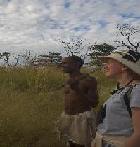
The original stewards of Botswana’s vast landscapes and wealth of wildlife have risen to create Gudigwa Camp – offering a rare glimpse into this ancient culture. The Bukakhwe San Bushmen developed the ecotourism project to create opportunity for emerging generations, help preserve their threatened culture, and protect the regions spectacular wildlife.
Gudigwa Camp sits on the edge of Botswana’s northwest savanna and the Okavanago Delta – one of the largest freshwater wetlands in the world. Guests stay in thatched huts modeled on those of the traditionally nomadic Bukakhwe peoples. In a typical day guests are treated to early morning bush walks, where they learn about the San’s cultural heritage – their used of insects, medical plants, sources of water, and how to track elephant, kudu, and perhaps a lion. Days are given over to relaxing, cooking, admiring San artisanry, or enjoying viewing elephants and other wildlife that may decide to visit. In the evenings guests are treated to traditional storytelling, campfires, and the Buakakhwe’s own unique songs and dances.
“Although we do not have fences separating the camp from nature, we think guests will be very comfortable and feel safe at our camp,” says Letshogo Tsima one of the camps managers. “What’s an eco-camp without nature right outside your door ?”
The Bukakhwe Cultural and Conservation Trust, Gudigwa’s community organization, owns Gudigwa Camp. They partnered with Conservation International to develop this project in response to the challenges they were facing as a community. The Bukakhwe San Bushman settled into Gudigwa in the late 1980s as part of a government program to provide basic health, education, and other public services. By 1999, Gudigwa found itself with one health post, no school, poor sanitation, and no access to markets. Issues were further compounded by the installation of veterinary fences, which were cordoning off wildlife from the Bukakhwe’s ancestral lands. The camp not only helps address immediate issues of lack of jobs and communications, but it is also part of a larger vision to create a model for how traditional cultures in Botswana can take part in and benefit from the tourism industry, while highlighting the need to address their situation
Location
Gudigwa Camp is located in the northern extremities of the Okavango Delta, about 65 Km northeast of the town of Seronga and 40km northeast of Vumbura Camp (the nearest tourist camp). The closest international airport is in Maun. The Camp can be accessed directly by charter flight from Maun or any of the other lodges in the Delta (approximately ½ hour). Gudigwa Camp is approximately 8 hours by private vehicle from Maun. The trip involves a ferry crossing at the town of Mohembo across the Delta and 4 hours on unsurfaced roads through Seronga and onto Gudigwa Village. Buses are available from Maun to Seronga, however
Contact
Gudigwa Lodge Reservations :
P.O.Box 45324 Riverwalk
Gaborone, Botswana
Tel & Fax : +267-3927704
Cell : +267-72243567
Email : Info@Gudigwa-Lodge-Bodswana.com
Internet : www.gudigwa.com
Representative of Internation Conservation of Botswana
Email : gudigwacamp@conservation.org
Internet : www.ecotour.org
Cultural Information
The oldest inhabitants of Ngamiland were the Khoesan-speaking peoples, such as the Bukakhwe. Evidence from Stone Age implements found at sites on or near the delta, indicate that man has inhabited the Okavango delta for about 10,000 years or more.
In the Okavango Delta, the Bukakhwe traditionally spent the wet season dispersed in the sandveld in the savanna areas of northwest Botswana, and moved to permanent water sources (springs or rivers) in the dry season where they often traded with other groups.
The Bukakhwe historically lived in small groups centered on extended family relationships. These family groups moved periodically in response to local depletion of game animals, and groups would sometimes camp together for several months or even years before going their separate ways. There was no central authority figure.
The Bukakhwe were both hunter gatherers, but also foraged in both the desert savanna and the Okavango swamps. Bukakhwe women collected some foods from the swamps but also collected foods from the savanna. These included eggs, roots, fruits, birds, and small game in addition to mongongo and marula nuts.
Historically their religious practices similar to those of many other Bushmen groups. These practices incorporate a strong belief in the supernatural with a deep reverence for the natural world. Today, most members of these groups practice their traditional religions. Many people also practice forms of Christianity, ranging from Western denominations or missionary organizations to indigenous forms of Christianity. The largest example of the latter is the South African based Zion Christian Church (ZCC), which is the major organized religion in Gudgiwa.
Today, as a result of multi ethnic communities, formal education, government programs, and modernization, members of all these groups are evolving a similar subsistence strategy of fishing, farming, collecting wild foods, herding, and hunting. Government regulation of hunting has greatly diminished the hunting component of all still, the Bukakhwe are substantially more oriented towards foraging, with far fewer cattle and smaller fields than members of the other ethnic groups.
Activities and services offered
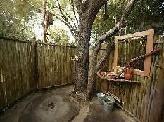
Facilites : Guests will stay in large, cozy grass huts made from local materials and modeled after traditional bushman shelters. Each of the 8 units has comfortable beds and linen, solar lighting and its own open air toilet and hot bucket showers on demand. The "camp" and its activities take place 5 km away from the Village of Gudigwa so as not to disturb the daily life of the people.
Activities : Activities will focus on various aspects of the Bukakhwe history, traditions and modern life. Guests will also enjoy bushman walks, traditional dances and songs, sampling local dishes, and learning the secrets of surviving off the land in the Okavango Delta.
Bushman Walks : Visitors will go out on short walks with both traditional and certified guides to take part in the Bushman’s knowledge of their natural surroundings. Guides will demonstrate how to track animals and identify tracks, locate ground water, collect honey, set “mock” traps for small game, and to explain the medicinal and nutritional uses of various roots, leaves, fruits, etc.
Traditional Dance : Bukakhwe dance troupes will demonstrate their local style of dance around the fire circle as they are traditionally done. Client will experience various types of dances and their purposes (i.e. hunting dance, rite of passage, etc.), which are highly distinguishable from the Kalahari Bushman.
Traditional Songs : Traditional songs and music will accompany the dances and will be presented using traditionally made and authentic instruments. Guests will enjoy a diversity of musical expressions of the Bukakhwe people, including hunting and fishing songs, children’s game songs and lullabies, and communal healing songs. Guest will experience the unique music produced by traditional and neo-traditional instruments such as mouthbows, drums, plucked lamellaphones, and guitars and violins fashioned out of paraffin tins
Storytelling : A large component of Bushman culture is their oral tradition of passing on knowledge from one generation to the next. Stories and fables will be told around the campfire in the San’s unique mother tongue, “khwedam”, composed of clicks and guttural tones. The host will interpret the Bukakhwe stories and songs into English.
Traditional Food Tasting : A mix of traditional and modern food will be provided for tourists including kudu, warthog, ostrich, as well as berries, fruits and teas from the bush. Cooking will be done over an open fire before the guests
Traditional Medicine : A traditional doctor will accompany the dance group and demonstrate the mystical powers of the traditional medicine used to cure ailing individuals in the village.
Sorghum Beer tasting : Tourists will have the opportunity to taste traditional sorghum beer fermented in the Gudigwa village.
Fire Making : Traditional guides will demonstrate how to make fire by friction using sticks. Guests will also be able to try their luck !
Spear Throwing : Visitors will be educated about the traditional weapons and traps used to catch game for food. A spear throwing demonstration will allow tourists to understand the skill required to hunt with spears.
Craft Making : Tourists will have the opportunity to buy crafts, such as baskets, thumb pianos and ostrich egg jewelry made locally by the people in Gudigwa.