

Text : Graeme Arendse, Photos : Imvubu Guests
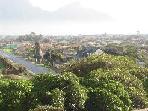
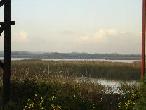
Just down the road from the busy city center, Cape Town has a secret. Tucked behind the mountains and on the coast, there is a small paradise at the convergence of Grassy Park, Lavender Hill, Lotus River, and Zeekoevlei. Driving to Imvubu nature reserve seems no different than driving through other suburbs located on the outskirts of Cape Town, but when you arrive at Rondevlei nature reserve and they open the doors, you are welcomed into a whole other world of natural beauty. After just a moment to take in the new surroundings, one is greeted by the friendly and dedicated staff of Imvubu Nature Tours. They know the reserve better than anyone else, and they are all too happy to show you the horticulture, let you play with the porcupine, and take you out on the lake. Perhaps most amazing about a trip to Imvubu is not only seeing the beauty of the reserve but seeing the deep respect that the staff has for the land and also for the surrounding communities. A day with Imvubu Nature Tours not only a break from the hectic pace in city life, it is a lesson in community upliftment and responsible business.
Imvubu Nature Tours is a community based tourism company that was established in April 2002 to manage all aspects of tourism at the Rondevlei Nature Reserve on the Cape Flats, Cape Town, South Africa.
The main reason for the creation of the tourism company was to provide the local community with an opportunity to become involved in the reserve and to create employment opportunities for the surrounding Cape Flats communities. The Dept of Environmental Affairs & Tourism and the Cape Town Tourism Development Fund provided funding for the company.
The most important innovation was the establishment of a local community tourist company instead of importing a well-established tourism company on board. Training was provided free of charge for local community members offering skills development for tour guides and will continue for all future guides.
The two guides initially employed are now equal partners in the company and management with a mandate to ensure a vested interest for all future employees. Imvubu currently employs three permanent staff, one contract staff member and uses guides from the local community on a part time basis as required.
The most specific poverty issue that is being addressed is poverty alleviation through job creation – related to tourism. A prime example is that of a local caterer who, since providing services to Imvubu has expanded her business and now employs five to eight local community members. With the upgrade of the reserve’s island bushcamp, the construction provided temporary employment. The resulting popularity of the facility has led to the creation of an additional full time post. Final touches have been put to the outdoor conference facility, which Imvubu foresees as creating even further employment opportunities.
Imvubu was showcased at the World Summit on Sustainable Development in 2002 for successfully addressing issues such as job creation, entrepreneurship, skills development and training.
Location
From Cape Town CBD, +/-22km’s (approx. 25 minutes drive) to Rondevlei Nature Reserve.
Contact
Graeme Arendse or Joy Bennett
Imvubu Nature Tours
Rondevlei Nature Reserve
1 Fisherman’s Walk
Zeekoevlei, 7941
Tel. : +27 (0)21 706 0842
Fax : +27 (0)21 706 9793
Email : info@imvubu.co.za
Internet : www.imvubu.co.za
Language : english
Community Background :
Rondevlei Nature Reserve is bordered by four different communities of varying income groups, religions, politics and race. These communities are Lavender Hill and CAFDA Village (working class suburbs) to the west, Grassy Park and Lotus River (working and middle class suburbs) to the north and Zeekoevlei (middle class) to the east.
Grassy Park is the oldest suburb in the area (then known as Zeekoevlei), with the earliest urban settlements happening as far back as 1911. Prior this the area was predominantly rural in nature. The largest influx of people to the area happened at the time of the Group Areas Act (1960’s), a racist policy of displacing black persons from areas of residence close to the city (source of work) to outlying areas. All the areas they were displaced from were declared “white”. Blacks were systematically classified as well, creating further divisions, by declaring those of mixed race or fairer complexion “coloured” and those of darker complexion “African”. The areas to which they were forcibly moved was divided along these lines.
Under these racist policies, the areas of Lavender Hill, CAFDA Village and Lotus River were established as “coloured” areas along with Grassy Park. Zeekoevlei was declared a white area (due to its location on the banks of a large recreational body of water). Although the country has gone through many changes since the days of Apartheid policy, these areas have remained the same in terms of the above mentioned racial classifications.
The classification of black persons as coloured, a completely fabricated identification, has meant that persons of varying cultures and backgrounds were lumped together to represent a singular group. With the result that the communities do not necessarily have one particular culture or identity. In these areas one would find a mixture of influences from Muslim to Christian to Indian as well as African, albeit to a lesser extent. The influence of mass media is very present, especially amongst the youth, where American cultural imperialism is evident in the choice of food, music, dress and language.
Rondevlei Nature Reserve, managed by the City of Cape Town, has existed within these communities for 53 years, yet it has only been made truly accessible to these communities in the last 10 years. Systems of education were divided along racial lines as well and within “African” and “coloured” curriculums, environmental conservation was almost non-existent. There was therefore no interest for the community to be involved with or even visit the reserve. They were also not encouraged, consulted or invited to participate by the environmental conservation bodies. This privilege remained the preserve of white communities. Who, besides being taught the value of the natural environment, also had the financial resources to enjoy nature reserves and the benefit of recreational time.
In an effort to redress these issues, the reserve instituted school visits from all schools to encourage awareness. It now has a formal environmental education officer and programme offered to all schools in Cape Town, at a reduced rate of SAR1 per learner, and attracts up to 5 000 learners annually. Through the reserve manager’s initiative, the Zeekoevlei Environmental Education Project (ZEEP), was established. ZEEP runs three day environmental education programmes for youth, particularly those from historically disadvantaged areas incorporating the facilities available at the reserve.
In 2002, Imvubu Nature Tours, a private company with start up capital from the City of Cape Town and the Western Cape Government, was established to handle all tourism related activities at Rondevlei Nature Reserve. One of the main areas it seeked to address was that of poverty reduction and community development. In its agreement with the City of Cape Town a mandate was formulated to rest ownership in the hands of community members. Employment opportunities are also extended to community members first. In its procurement of goods and services, the businesses in the immediate community are given first preference. In addition, a percentage of the business turnover is paid into the ZEEP trust.
Activities and services
Island Bushcamp Accommodation
Boat Based Tours
Guided Interpretive Walks