


Text and photos : Pam Wight
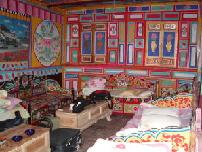
Western China encompasses the eastern ranges of the Himalayas. In these mountains live the Jiaron people, a very important branch of Tibetans. They raise livestock, feeding yaks and other animals, and farm in the valleys, and are famous for planting crops in the valleys and slopes, so are called the great farmers of Tibet. They also build marvellous white buildings which resemble the alpine mountains, with traditional paint decorations and Buddhist prayer flags. Jiaju is a famous Jiaron village which lies at over 3,000 m beside the Jinchuan River. In its valley are several similar villages, with similar types of traditional Tibetan buildings. In Jiaju, 600 people live in about 150 households, within 5 square klms. Visitors come here to visit the characteristic architecture and to experience Jiaron culture. Many families have converted their multi-storey south-facing dwellings to become homestays, so that tourists can live with their host family. Baosheng’s house is typical, with several generations of his family living in its many rooms. It is a traditional multi-storied house, with animals in the bottom floor, public rooms and kitchen on the entrance level, sleeping quarters for family and guests above that, a grain-drying floor (maize, peppers, etc.), and an upper prayer-room at the very top, reached by ladders. Guests are treated to traditional dancing and singing when they arrive, and tourists may participate.
International visitors are advised to have knowledgeable people drive them to the village, which may be hard to find just off the main highway, a considerable drive west of Chengdu. Although there are about 50 homestays in the village, only 15 currently belong to the Tourism Association, developed in 2002. Members maintain standards related to such aspects as toilet facilities (traditional), architectural modifications (blends with traditional styles), education levels, ability to cook non-Tibetan meals, or garbage disposal (by burning or deep burial). The village is not without issues. Besides many households not belonging to the association, there is a problem of water shortage during the dry season. Facilities can receive up to 1,000 tourists a day, but this presents problems with as human waste disposal and waste water. Also, some homes have installed Western showers and toilets, which reduces the limited water supply even further, intercepting water flowing to adjacent villages, and increasing waste-water and sewage disposal problems. Thus Association members favour traditional washing and facilities for villagers and guests. They realise that hosts must work together to coordinate planning for sustainable outcomes that fit with their environment.
Contact
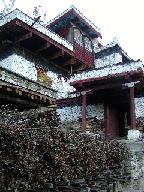
Baosheng, Jiaju Village
Tel. :086-013688498350 or
086-0836-3523081
Email : tianfeng@conservation.org.cn
Language : Chinese or Tibetan
In the Western region, few places can use internet. The CI-China office in Chengdu, Sichuan, can help with booking.